A third culture for couples and families
Helping families build their Third Culture.
Living abroad has a way of bringing differences to the surface.
When culture, generations, different needs or life transitions make it harder to understand one another, Vanessa helps couples and families make sense of their differences and create a way of living together that belongs to them.
Sometimes the differences are cultural: two nationalities, two languages, two ideas of what family, parenting, intimacy or respect should look like. Sometimes they are generational: parents and children reading the world in different ways. Sometimes life itself changes the family system: a child with different needs, a parent becoming dependent, a blended family, children leaving home, or a relationship reaching a crossroads.
Her work is to help people understand the different worlds they are bringing into the relationship and, where possible, build a third culture — in her words, not yours, not mine, but a way of being together that works for us
.
What is a couple?
Two people who feel that they belong together and who relate to each other, because they share a value, or several values, that distinguishes them from others. They form a we, and define something as ours.
A couple has a common ground, a common outer boundary, and a common intimacy.
Encounter was built from in and contra: to come to stand facing. The contra names a position rather than a quarrel — the one opposite me, my counterpart, the Gegenüber. Two people arrive where each can be seen by the other, and what passes between them at that point is the encounter itself.
Four fundamental conditions hold a life between two people, and a couple in difficulty can usually say which one has gone thin.
-
GroundProtection, space, and support. Can I be here, with you?
-
WarmthTime for the relationship, closeness kept alive, values enjoyed in common — the ordinary pleasures that make a shared life worth its journey. Do I like being in this relationship?
-
Being oneselfRespect, fairness, appreciation, interest in what makes the other different — and enough distance that each stays a person. May I be myself with you?
-
A shared directionSomething being made together: a life story with a direction. What are we for?
Culture sits inside each of the four. What protection looks like, how much closeness counts as care, what respect sounds like, how expectations can be met, what a life is supposed to be for: each partner learned an answer long before they met, and the relationship requires its own definition, shared by both partners.
Life changes press on all four at once — a first child, a move to another country, work that reshapes one of them, illness, families blending, a child leaving home, retirement. Raising a child who needs more asks a particular endurance.
Little of the damage comes from one argument. Most of it accumulates, a misreading at a time.
The couple is more than the individual parts.
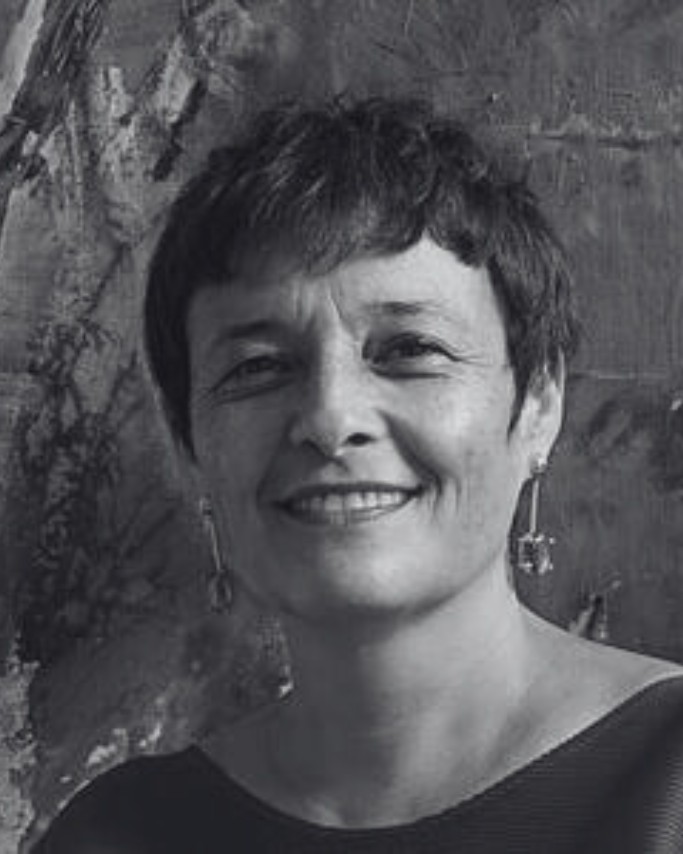
Vanessa's doctorate is in behavioural sciences. Her research is on interpersonal conflict, cultural intelligence, and the mechanisms by which one person reads another's behaviour and intentions.
For more than twenty years she has worked with individuals and teams across differences of value, communication style, and cultural perspective. That work continues with international organisations under her own practice, LeadershipCQ.
A couple is the smallest version of that problem, and the most demanding. Two systems of ordinary sense are asked to become one household, with everything at stake and no colleagues to absorb the difference.
Her care is that an encounter takes place, since this is where the personal comes into a relationship and brings it to its fulfilment.
She holds the conversation as a neutral third party. Each speaks in full and is heard to the end, and a difference is named as a difference: a way of living learned in one place, meeting a way learned in another.
Sessions are long enough for three voices, held online, over an agreed number of meetings, with a purpose set at the start and reviewed at the end.
Four questions run underneath the work, and each of them needs exploring.
Being able to be there with this person. Whether protection, space, and support still pass between them, and whether the everyday is ordered well enough to carry a life. This is what brings stability and ground, and it holds the framework in which the rest becomes possible.
Liking to live with this person. Time given to the relationship, closeness, attraction, tenderness and desire kept alive. And values lived in common — in the ordinary week, in celebrations, in the larger things each holds — shared with each other rather than agreed upon.
Being allowed to be oneself with this person. Respect, fairness, and appreciation, given and received; the intimacy of the other respected, and abilities, decisions, and ways of doing things recognised. Long habit dulls this one first, which is why appreciation is worth cultivating deliberately.
Living a common meaning with this person. Whether valuable things can still be made together: a common world, shared goals, tasks and projects, children, travel, a life story with a direction. Rarely has anyone met the best of all possible partners, and two people can still grow together. A shared why also makes hardship bearable, and hardship borne together becomes part of the common ground.
The questions carry their opposite as well: whether to stay when growth has stopped, and what separating would make possible. What they conclude belongs to them — to continue as they are, to change how they live, or to part. The work is to make it a decision taken with open eyes, by two people who can each speak and be understood.
This work is facilitation. A third person holds a difficult conversation so that it stays possible, and the couple carries out the thinking, the deciding, and the living afterwards.
Facilitation works with what the couple already has, by changing the conditions under which they speak to each other.
- For
- Couples and families — strengthening what they have, or in a hard stretch
- Especially
- Intercultural couples and expatriate families, across generations
- Format
- Online, by video
- Where
- Wherever each of you is
- Hours
- Paris time
- Languages
- French, English and Portuguese
- Length
- 90 minutes
- Series
- In batches of six sessions
- Fee
- 129 € per session
A first conversation is where the work begins: what brings you, who is involved, and whether facilitation is the right form for it. Write in French, English or Portuguese.
vanessa@atelierbegreat.comHer practice with organisations lives at LeadershipCQ.