Movement & expression for young children
A time set aside for children of three to ten to move together — where everything they arrive with is given somewhere to go.
A child arrives with more feeling than words.
The excitement of the morning, the shyness of a new room, the anger that still has no name — all of it comes in through the door with them. In these sessions it is given a form to take: a gesture, a shape, a rhythm, a story the group tells with its bodies.
Sessions run in a small group, so each child stays visible and can be met. They begin with a way in that is simple enough for a three-year-old, open out into play and invention, and close with a settling — a return to calm together, so that a child leaves the room gathered.
Expression comes from ex-primere, to press out: what is held inside brought to a surface where it can be seen. Children do the pressing out with the whole body, years before they have the words for it.
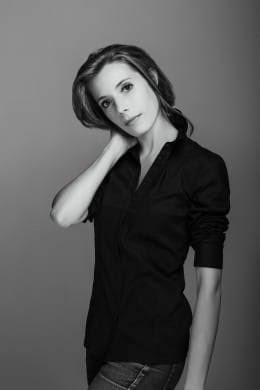
Pauline trained as a professional dancer — the Conservatoire in Paris, then years on stage, including at the National Theatre in Prague.
A dancer spends a career learning what a body says before a word is spoken: where a breath stops, where weight is held back, how a small change in the feet changes everything above them. That reading is the craft she brings into a room of small children — an eye that notices the child hovering at the edge of the circle, and knows several ways to invite them in.
The same training gives her the other half of the work: how to build a form a child can trust. A session has a shape, a beginning and an end, and enough repetition that a three-year-old knows where they are.
Feeling can be learned, the way a language is learned.
The conditions come first: room enough for a child to arrive at their own speed, a session with a shape they can rely on, and an adult who keeps her word. That is the ground. Once a child is standing on it, the learning begins.
The material is their own inner world, and the body is where it is taught, because at this age the body is the first language. A feeling is given a form — made big or small, fast or slow, shown to the group, taken back, tried again differently. What arrived as a wave from nowhere becomes something with a shape and an end, and something a child can work with.
From there they learn to tell one state from another and to find the word that fits: excited alongside frightened, disappointed alongside angry. The naming follows the doing, as it does at this age — the body knows first, and the word is fitted to what has already been felt.
Something is asked of them throughout. To wait a turn, to hold a form, to watch another child and take it in, to stay with an attempt that came out clumsy. Pauline is warm and she is exacting; children of five can feel when an adult is teaching them something real, and they rise to it. Lightness runs through the whole of it — laughter is what gives a small person permission to try, and to get it wrong.
Every child has a way of moving that belongs to no one else. The work is to help them find it, and use it.
-
A place that holdsThe same beginning, the same closing, a place among the others that is theirs. A child who knows where they are can begin.
-
The pleasure of movingSpeed and stillness, weight and lightness, being carried by music. Delight is the reason a child comes back, and it is taken seriously here.
-
A movement of their ownEach child invents something and shows it. What they make is theirs, and it is received — which is how a small person learns they are someone with something to show.
-
Something they carry outWhat is found here travels — into the classroom, the playground, the next unfamiliar thing a child is asked to walk into.
These sessions belong to play and enrichment. They give a child room to move, to express, and to be met with attention — the good of an art practice, offered at the age when the body is still the first language.
A child who needs specialised care finds it with a specialist, and Pauline will say so plainly to a parent when she sees it. Her care is to hold this time well, and to be clear about where it ends.
- Ages
- 3 to 10
- Group
- 4 to 12 children
- Length
- 60, 90 or 120 minutes
- Rhythm
- Weekly, monthly, or once a quarter
- Where
- Studio in Prague, and online
- Languages
- French and English
- Fee
- 29 € for 60 minutes, 39 € for 90, 49 € for 120 — per child, in a group — preliminary, to confirm
Questions about a child, a term, or a place in the group go straight to her.
pauline@atelierbegreat.com